Automate Your Business Processes with Bespoke AI
You have processes that eat hours every week. Data entry, CRM updates, invoicing, scheduling, reporting. I build custom automation systems that handle all of it, so your team can focus on work that actually grows the business.
Book a Discovery CallYou Are Still Doing This Manually
These are the tasks I hear about most. They are repetitive, they follow a pattern, and they are costing someone on your team hours every week.
CRM updates and data entry
Someone on your team is copying data from one tool to another. Forms into spreadsheets. Spreadsheets into the CRM. CRM into the project management tool. It is the same data being moved between systems that do not talk to each other. That person could be spending their time on clients.
Invoicing and financial admin
Chasing invoices, reconciling accounts, matching payments to records. It follows the same pattern every time, but someone still has to do it manually because the finance tools were never connected to the rest of the stack.
Scheduling and communications
Meeting confirmations, appointment reminders, follow up messages, WhatsApp responses. All predictable. All taking time from someone who could be talking to actual clients instead of sending the same reminder for the fifteenth time this week.
Reporting and data collection
Pulling numbers from Google Sheets, ad platforms, CRMs, and trying to get them into one place that makes sense. By the time the report is done, the data is already out of date. I build systems that run at 2am so the report is ready before anyone gets to their desk. If you need a live dashboard on top of that, I build custom dashboards too.
Business Process Automation Examples
Every build is different, but these are the categories I work in most. If your problem fits one of these, I have probably built something like it before.
Lead Processing and Distribution
Raw leads from forms, scrapers, or ad platforms get cleaned, verified, scored, and routed to the right person automatically. Email validation, phone number checks, geographic filtering, CRM integration. One client had leads coming through Typeform that needed verification before being split across different partner sheets. The whole pipeline runs without anyone touching it.
Scheduling and Communications
Automated appointment booking, WhatsApp Business messages, email responses, follow up sequences, and reminder systems. The kind of work an executive assistant spends half their day on, but running around the clock without taking a day off. If the process follows a pattern, it does not need a person doing it.
Financial Process Automation
Invoice generation, accounts receivable chasing, bookkeeping reconciliation, payroll processing. I connect finance tools like Xero or QuickBooks to the rest of your stack so the money related tasks stop falling through the cracks.
Client Onboarding Workflows
A new client signs. Everything that follows gets triggered automatically: project spaces created, team briefed, welcome emails sent, billing set up, CRM updated. I built one of these for an agency that was losing two to three hours per new client to admin that was exactly the same every single time.
Data Collection and Reporting
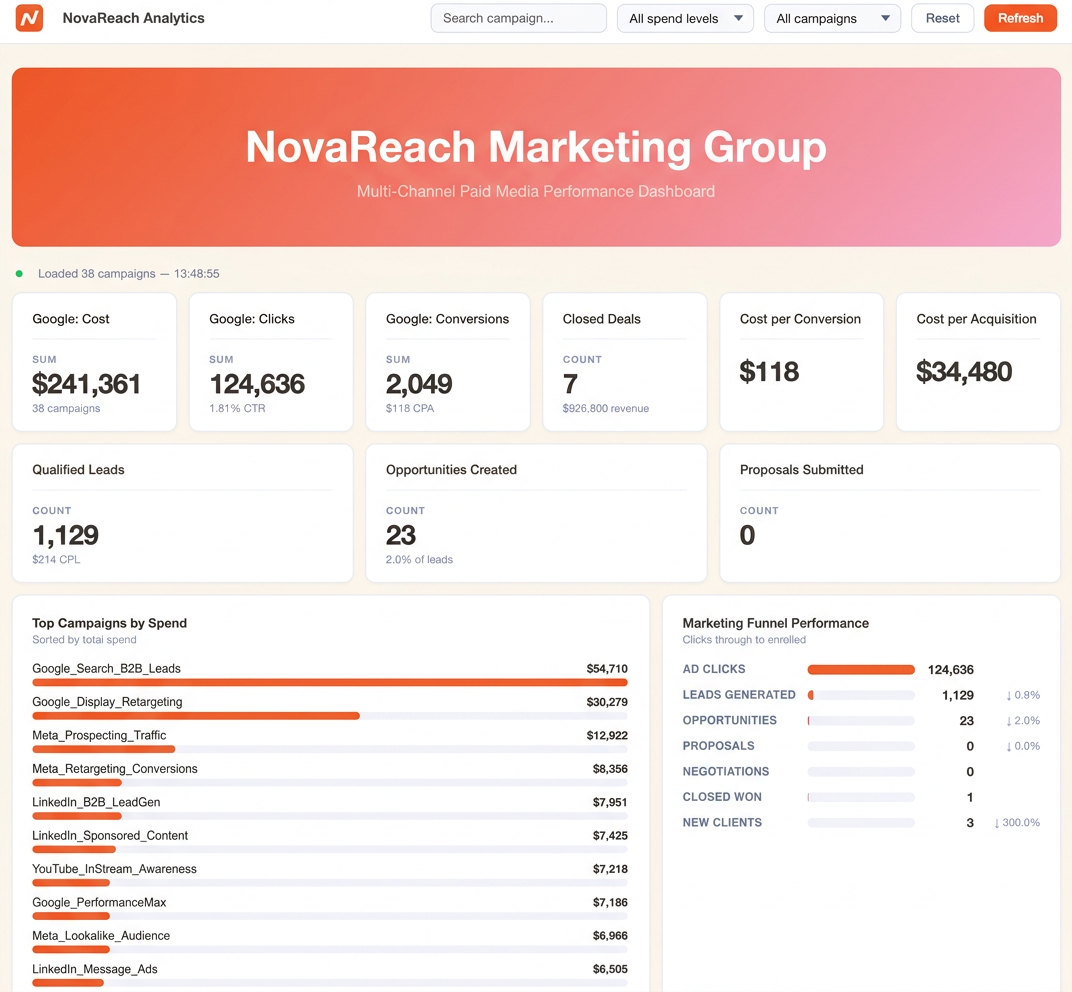
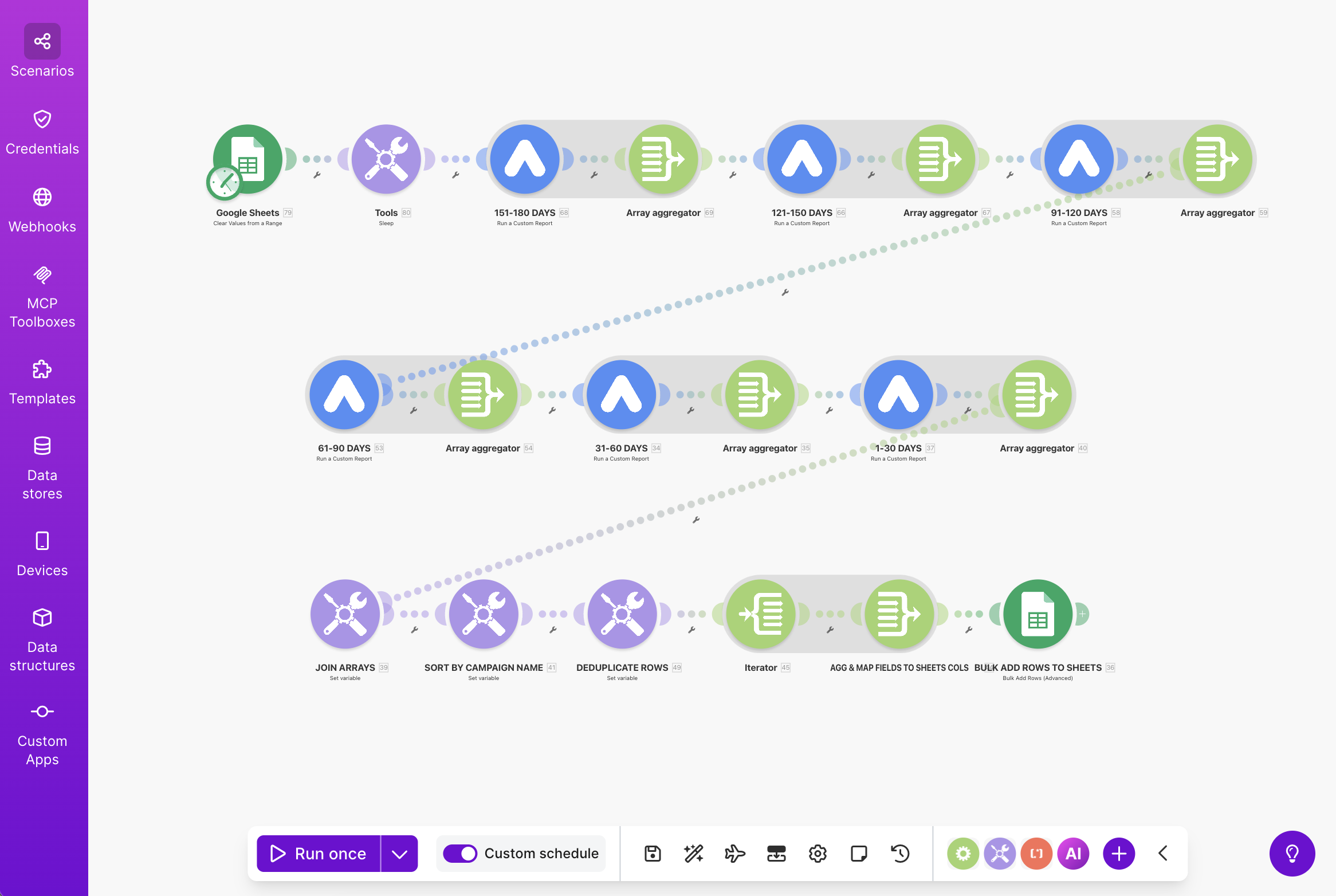
Pulling data from multiple sources, cleaning it, and putting it somewhere useful. Google Sheets automation, cross platform reporting, automated data aggregation. One project involved pulling ad data from Google, Meta, and LinkedIn, matching it to CRM pipeline data, and surfacing insights that were invisible when the reporting was manual.
Tool Integration and API Connections
Your CRM does not talk to your project management tool. Your ad platform data does not match your finance system. I connect the tools you already use so data flows between them without anyone copying and pasting. If it has an API, I can almost certainly work with it.
Looking for done for you cold email outreach or a marketing intelligence dashboard? Those have dedicated services with their own pages.
What Makes a Good Bespoke Project
Not every idea is the right fit for a bespoke build. Here is an honest guide to what works well and what probably does not.
Good candidates
- A repetitive process your team does more than a few times a week
- Something that follows a consistent pattern even if it feels complex
- A workflow that sits across two or more tools that do not currently talk to each other
- A problem where the manual workaround is costing your team more than a few hours a week
- You can describe the steps clearly, even if the technology side is unfamiliar
Less suitable candidates
- Processes that change constantly and have no predictable pattern
- Tasks that require genuine human judgement on every single instance
- Ideas at the very early stage that have not been done manually even once yet
- Things that would save less than an hour or two a week and are unlikely to justify the build cost
- Problems where the ROI is not clear enough to put a number on
If you are not sure which side your idea sits on, tell me what it is and I will give you a straight answer. That is what the discovery call is for.
How the Process Works
Four steps. No vague proposals, no hidden extras, no surprises halfway through.
You tell me what you are trying to solve. I ask questions. I get a clear picture of the current process, the tools involved, the data that exists, and what a successful outcome looks like. I find it much easier to understand the problem when I can see the system, so if you can show me what you are working with, even better. No commitment required at this stage.
I put together a clear scope of what I would build, how long it would take, what tools it would involve, and what it would cost. Fixed price for a defined scope. You know exactly what you are agreeing to before I start. If we need to phase the work, I will tell you which phase delivers the most value first.
I build in stages where possible, showing you working components before the full system is complete. You can see it running against real data before you sign off. I give you a daily project update so you always know where things stand.
I test against real data before anything goes live. I document how it works and walk your team through it. You own the build. You own the logins. You own the credentials. I am available for ongoing support if you want it, but you are never dependent on me to keep it running.
Tools I Build With
I use whatever combination of tools solves the problem most effectively. I am not locked into one platform.
If your problem requires a tool not on this list, tell me what it is. If it has an API, I can almost certainly work with it.
Why This Needs a Specialist
The most common mistake I see is people trying to do this themselves, spending weeks on it, and ending up with something that does not quite work. Meanwhile their competitors are implementing properly and pulling ahead.
I spent five years at BAE Systems Digital Intelligence, where I won over £100 million in new revenue at three times the industry win rate. That background means I understand how businesses actually procure and implement things. The consulting piece, understanding requirements, translating them into clear solutions, managing change, is what most automation agencies skip entirely. I do not just build the thing. I make sure it actually gets used.
Zapier was the standard. Then everyone moved to Make. Then n8n. Then Claude Code. The landscape shifts so fast that even I find it hard to keep up, and I do this every single day. Businesses are often two generations behind on tools without realising it. I stay on top of what works now so you do not have to figure out which platform launched last week.
Not every automation idea justifies the build cost. If the ROI is not there, I would rather tell you on the discovery call than scope a project that will disappoint. I do not need every project. I need the ones where the outcome is clear and the value is obvious. If your idea is better solved with a simpler approach, or if it is not ready to automate yet, I will tell you that.
Want to understand more about what automation can do for your business? Read What Is AI Automation for B2B? or How to Cut Hours of Admin with Automation.
Real Builds, Not Mockups
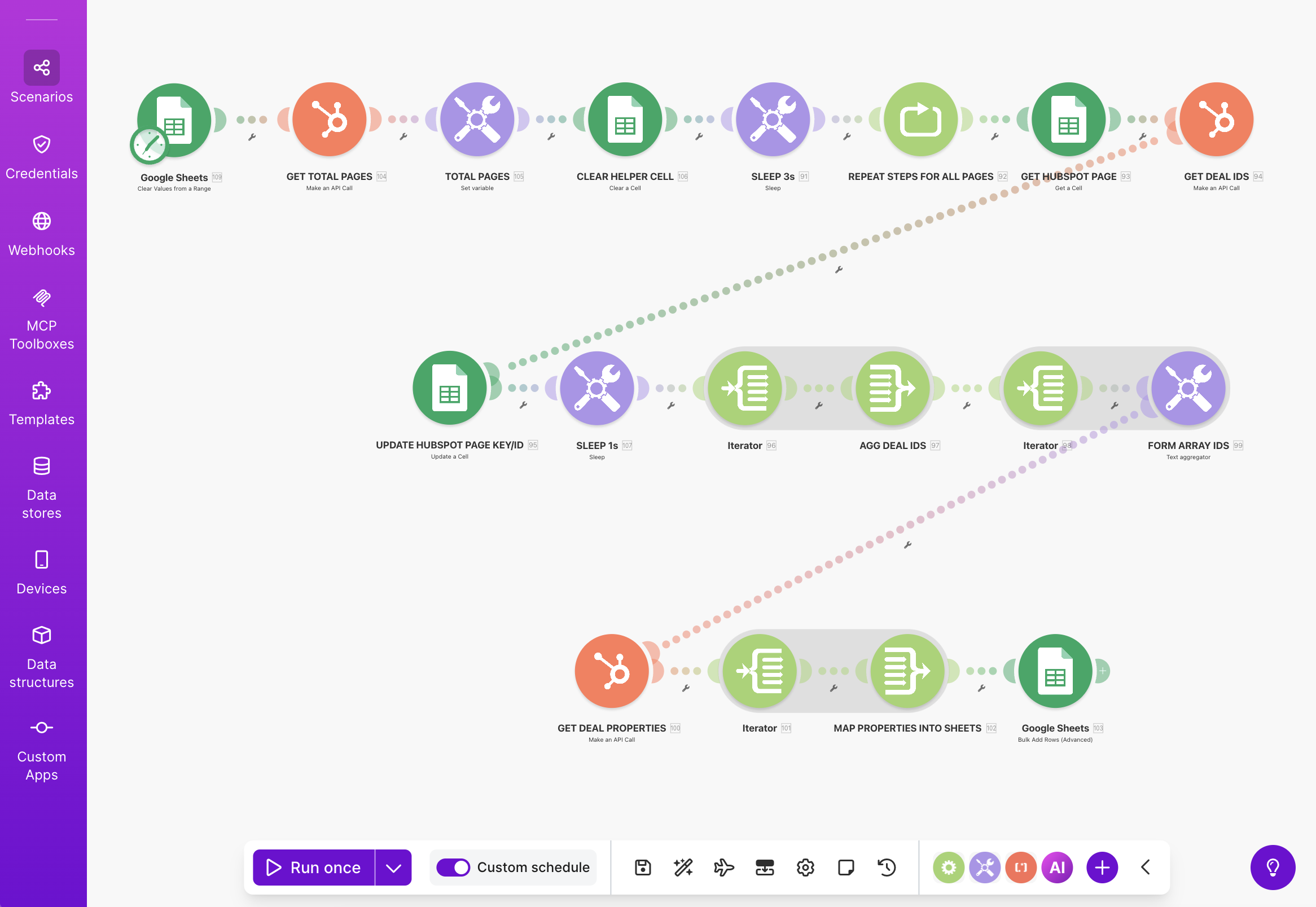
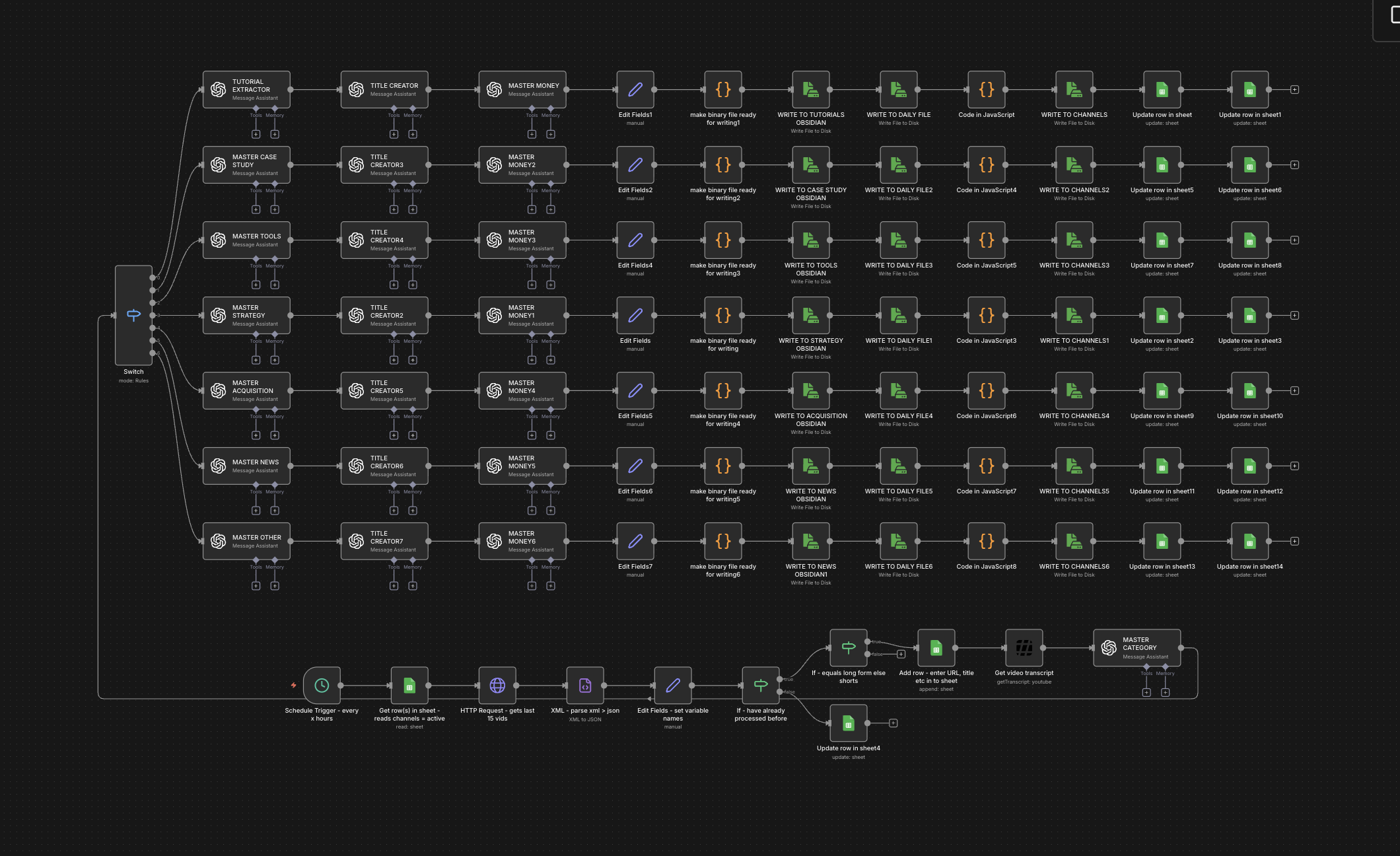
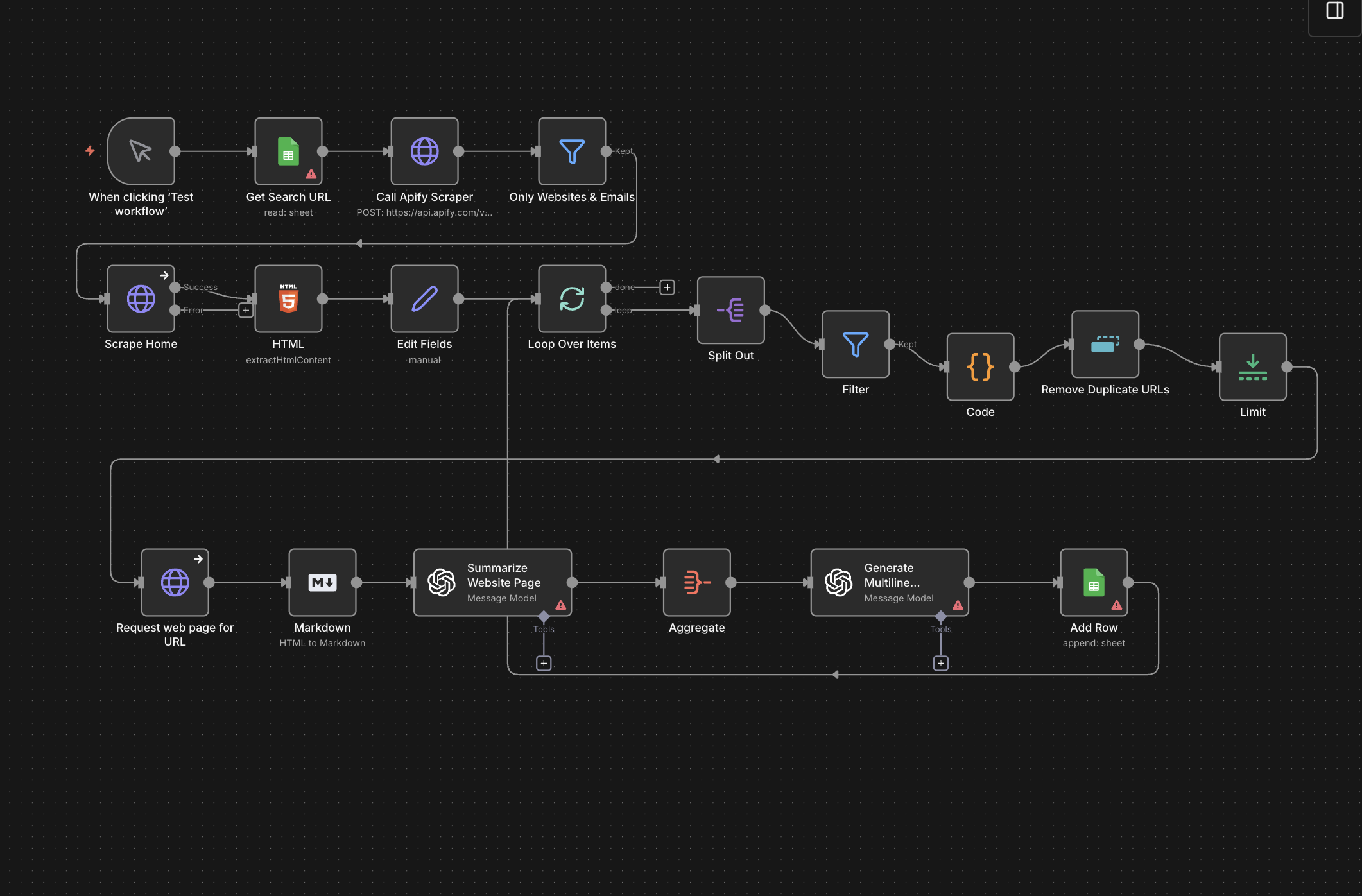
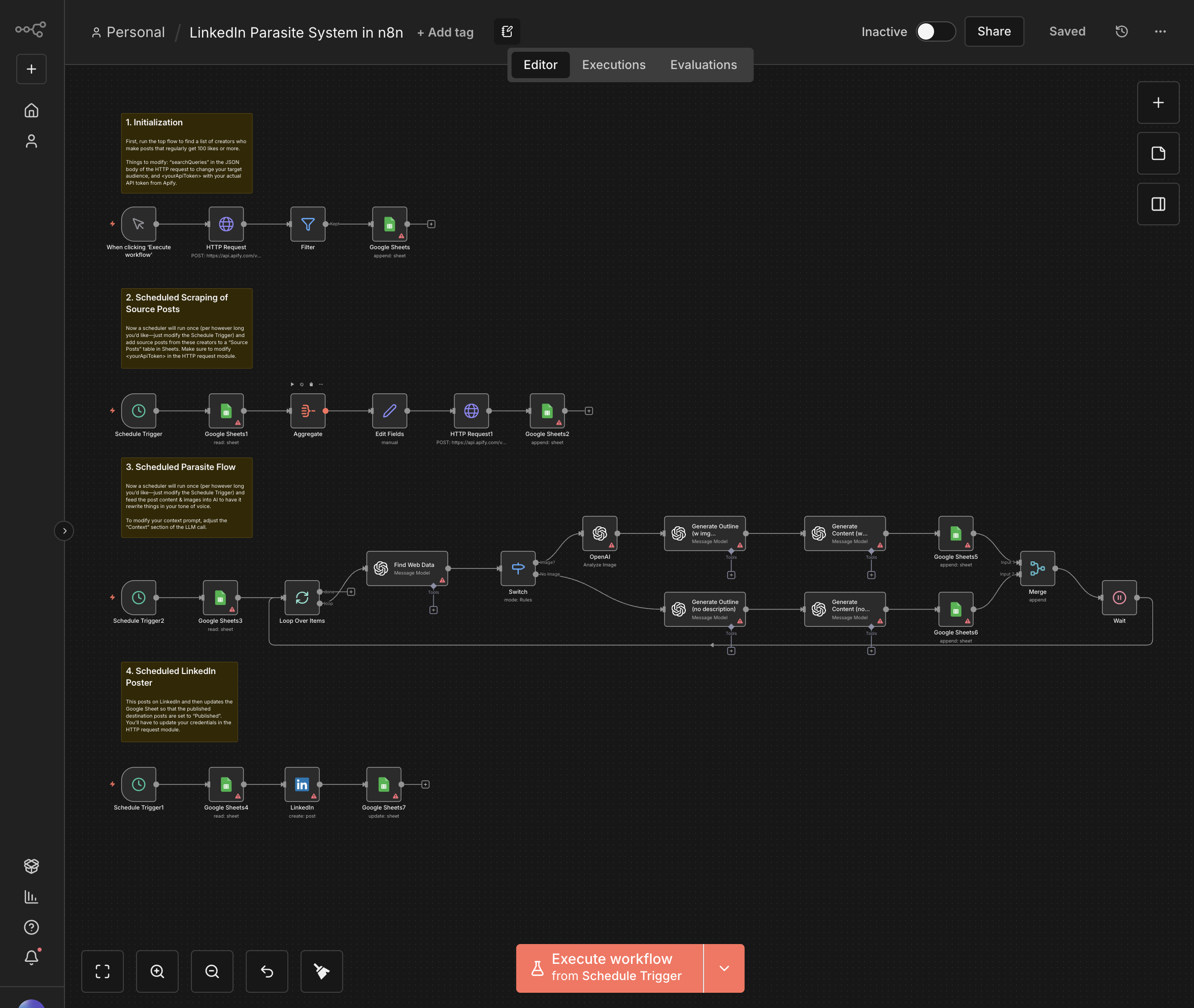
Screenshots from actual client automation systems. These are the tools and workflows I build every week.
What Clients Say
"From our very first conversation, it was clear that he is an expert in his field. He took the time to thoroughly understand our business, the use case, and the specific data we needed, as well as the reasoning behind it. Throughout the project, Josh consistently suggested the best way forward. Even when we overlooked something, he was already a step ahead, ensuring nothing was missed. His professionalism, attention to detail, and ability to communicate complex ideas in a way that empowers the business to make future adjustments independently are truly invaluable. Finding someone you can trust with projects of this nature, who not only delivers exceptional results but also makes the process clear and collaborative, is rare."Xen, Wonderwork Digital
Frequently Asked Questions
What is business process automation?
Business process automation means using software and AI to handle tasks that a person currently does manually. That could be moving data between systems, sending scheduled emails, generating reports, updating your CRM, or processing invoices. The goal is to remove the repetitive steps so your team can spend their time on work that actually requires a human.
What are the benefits of automating business processes?
The obvious benefit is time saved. But the real value is the double delta: you save money on the task itself because automation is cheaper than a person doing it manually, and the person who was doing that task is now free to do higher leverage work like generating revenue, talking to clients, or solving problems. A task that takes someone two hours a week costs roughly £1,500 a year in salary alone. Automate five of those and the numbers add up fast.
What are some examples of business process automation?
Common examples include automating CRM updates when a form is submitted, generating and sending invoices on a schedule, routing leads from multiple sources to the right team member, sending WhatsApp or email reminders automatically, pulling ad platform data into a reporting dashboard, processing documents with AI extraction, automating client onboarding checklists, and syncing data between tools that do not natively connect.
How do I know if my process is automatable?
The best test is: does it follow a consistent pattern? If someone on your team does the same sequence of steps more than a few times a week, and those steps involve moving data, updating systems, or producing a predictable output, it is almost certainly automatable. If you are not sure, describe the process to me on a discovery call and I will tell you honestly whether it is worth building.
Can you automate invoicing and accounts receivable?
Yes. I connect your finance tools like Xero or QuickBooks to the rest of your stack so invoices are generated and sent automatically based on triggers you define. For accounts receivable, I build automated chasing sequences that follow up on overdue payments without anyone on your team having to remember to send the email.
How do you price bespoke automation work?
I scope and price each project individually after the discovery call. I give you a fixed price for a defined scope rather than billing by the hour. You know what it will cost before I start and there are no surprises. If it takes me longer, it takes me longer, but you still get the same outcome. For ongoing work, I offer monthly retainers with a set number of projects or hours. Full details on my pricing page.
What if requirements change during the build?
I scope carefully to minimise this, but it happens. Minor changes within the agreed scope are handled as part of the project. Significant additions are discussed and priced separately before I proceed. I never build something different from what was agreed without telling you first.
How long does a bespoke automation project take?
It depends on complexity. A focused single workflow build can be live in one to two weeks. Complex multi system builds that pull data from several platforms, process it, and push it somewhere else take four to six weeks or more. I give you a realistic timeline as part of the proposal and I do not commit to timelines I cannot hit.
Can I start small and expand later?
Yes, and I recommend it. Build the first workflow, see it working, then decide whether to expand. Starting small reduces risk and lets you validate the approach before committing to a larger build. Most of my longer engagements started with a single focused project that proved the value.
Got a Problem That Does Not Fit a Template?
Tell me what it is. I will tell you whether I can build it and what it would take. No pitch, no pressure. Just a straight conversation about your problem.
Book a Discovery Call